


Hypervolt Home 3 Pro Installed in Princes Risborough
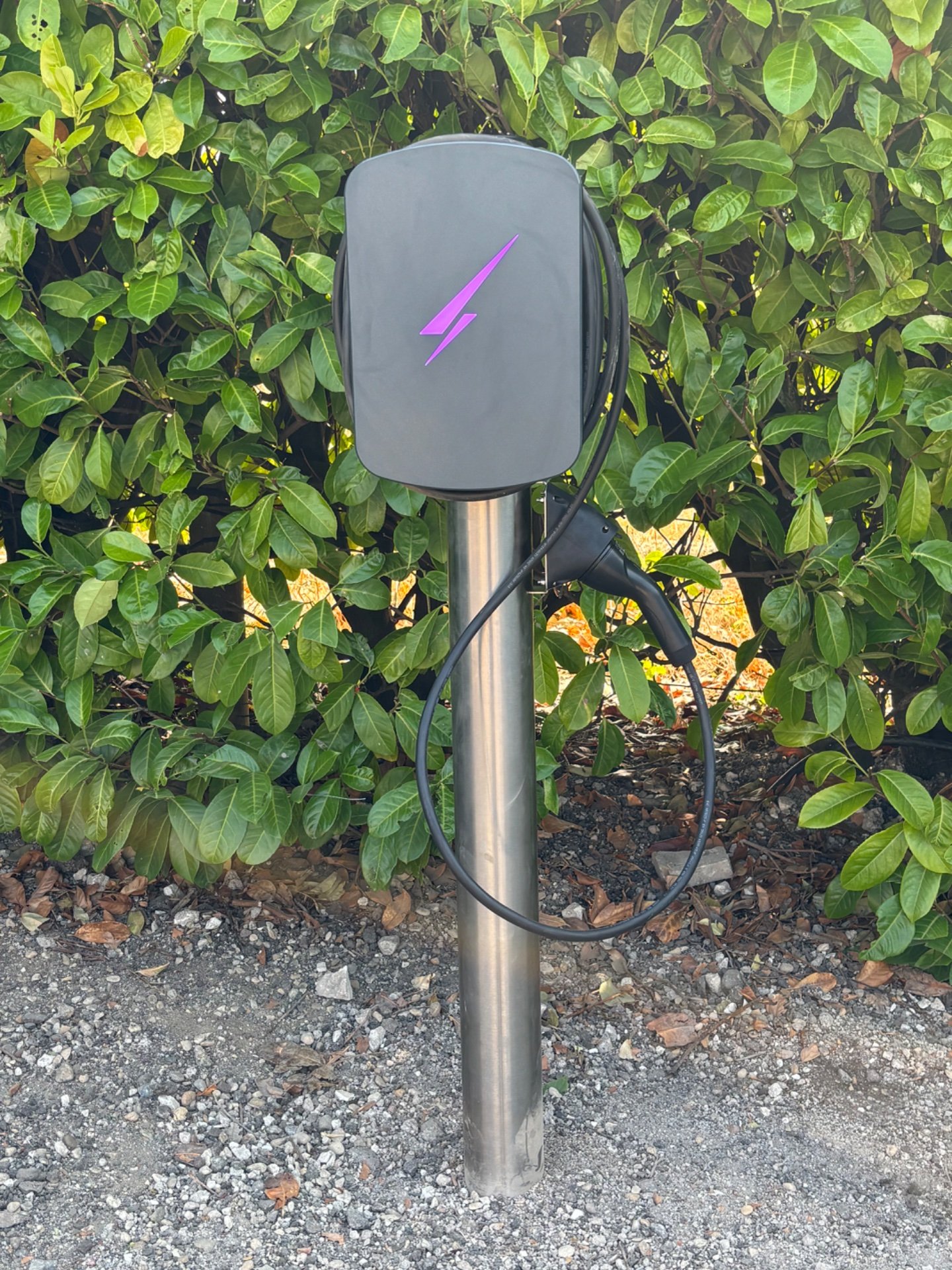
Hypervolt Home 3 Pro EV charger installed at a Princes Risborough property with a 36-metre cable run through the garden. Complex routing solved with careful planning.
Want an EV charger installed at your home? View our EV charger installation service or Princes Risborough EV charger page.
We recently installed a Hypervolt Home 3 Pro at a property in Princes Risborough, HP27 0DP — and it turned out to be one of the most complex EV charger jobs we've tackled. The driveway sat at the far end of a long garden, which meant running cable from the house all the way around the property perimeter. One of our NAPIT-certified electricians managed the entire project, working through multiple challenges to deliver a solution that also future-proofs the home for solar panels. The result is a fully functional 7.4 kW charger on a pedestal mount at the drive, with the customer delighted.
Why was this Princes Risborough EV charger installation so complex?
The main challenge was distance. The incoming electrical supply sat under the stairs inside the house, and the driveway was at the opposite end of the garden — roughly 36 metres away. A standard EV charger installation takes 2-4 hours, but this job required careful route planning and multiple site visits.
Our electrician had to thread cable diagonally under the stairs and above the toilet room, then follow the existing duct through the utility room. From there, the cable exited through an external hole in the wall — no internal making good needed. The team then routed the cable around the garden perimeter using SWA (Steel Wire Armoured) cable throughout the entire 36-metre run.
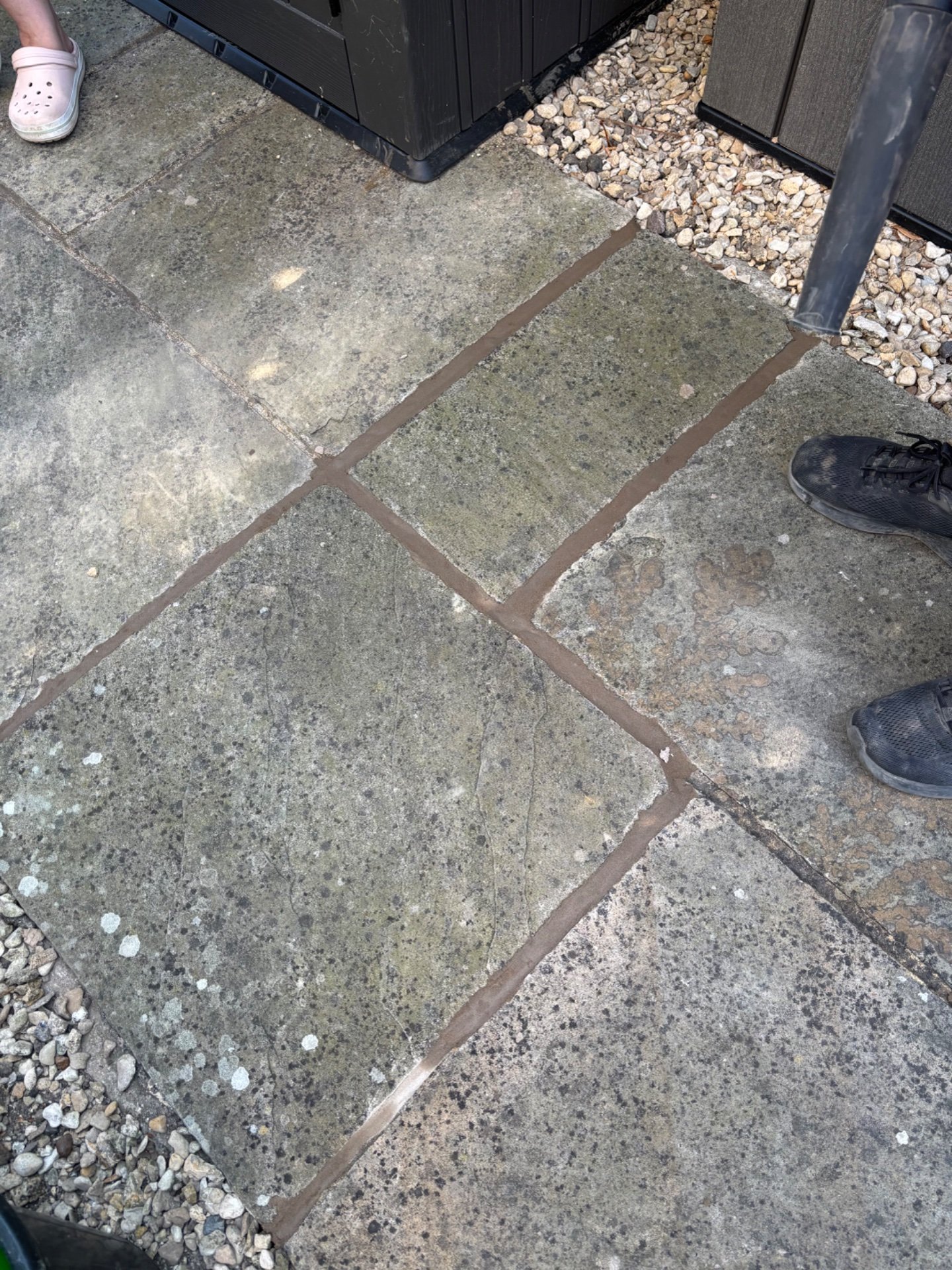
When the cable had to cross a patio, we dug up two patio slabs and relaid them. The gravel section required a trench. At the garden fence, the cable ran along the wooden fence posts. Finally, another trench was dug to reach the driveway itself.
But the distance was only half the problem.
How did you solve the concrete base and Wi-Fi connectivity issues?
Before we could install the charger, we needed a solid foundation. The driveway had no concrete base to fix the pedestal mount to, so we visited a week earlier to pour a 450 x 450 mm concrete base, 450 mm deep. We ran conduit up the middle of this base so that when we returned to install the charger, the cable could pass safely through it.
The second major challenge was Wi-Fi. The driveway sits at the far end of the property, well out of range of the home's internal router. The Hypervolt Home 3 Pro needs internet connectivity to function properly, so we had to get creative.
We used EV Ultra cable with an integrated Cat 6 Ethernet connection. This allowed us to hardwire the Ethernet cable from the charger all the way back to the meter cupboard inside the house — the same 36-metre route as the power cable. Inside the meter cupboard, we fitted a single socket and the customer installed a Wi-Fi access point into it. The charger now connects to this access point via Wi-Fi, giving it full connectivity without needing a separate wireless router at the driveway.
This solution required serious consideration during the free site survey. It's exactly why we assess every property in person before quoting any work.
What about the electrical supply and isolator?
Before we could start the installation, we discovered the customer had a smart meter fitted with no isolating switch on the electrical supply. We worked with the customer and their energy provider to get a double pole isolator installed first. This is a safety requirement — you need a way to safely isolate the circuit before working on it.
Once the isolator was in place and the customer confirmed they had ample supply capacity, we could proceed. We visited a week later to pour the concrete base, then returned again to run the cable and fit the charger.
Why did you choose the Hypervolt Home 3 Pro for this job?
The Hypervolt Home 3 Pro was chosen specifically because of the cable route challenge and the need for a pedestal mount. Not all chargers come with pedestal options — this was a critical factor in our selection.
The charger also supports the hardwired Ethernet connectivity we needed to solve the Wi-Fi problem. Its build quality and reliability made it the right choice for a property where the installation itself was so involved.
Many Chilterns properties — especially Victorian and Edwardian homes in Princes Risborough — require careful cable route planning from the fuse board to the garage or driveway. Our NAPIT-certified electricians assess this on the free site survey before any work is agreed.
How did you future-proof the installation for solar panels?
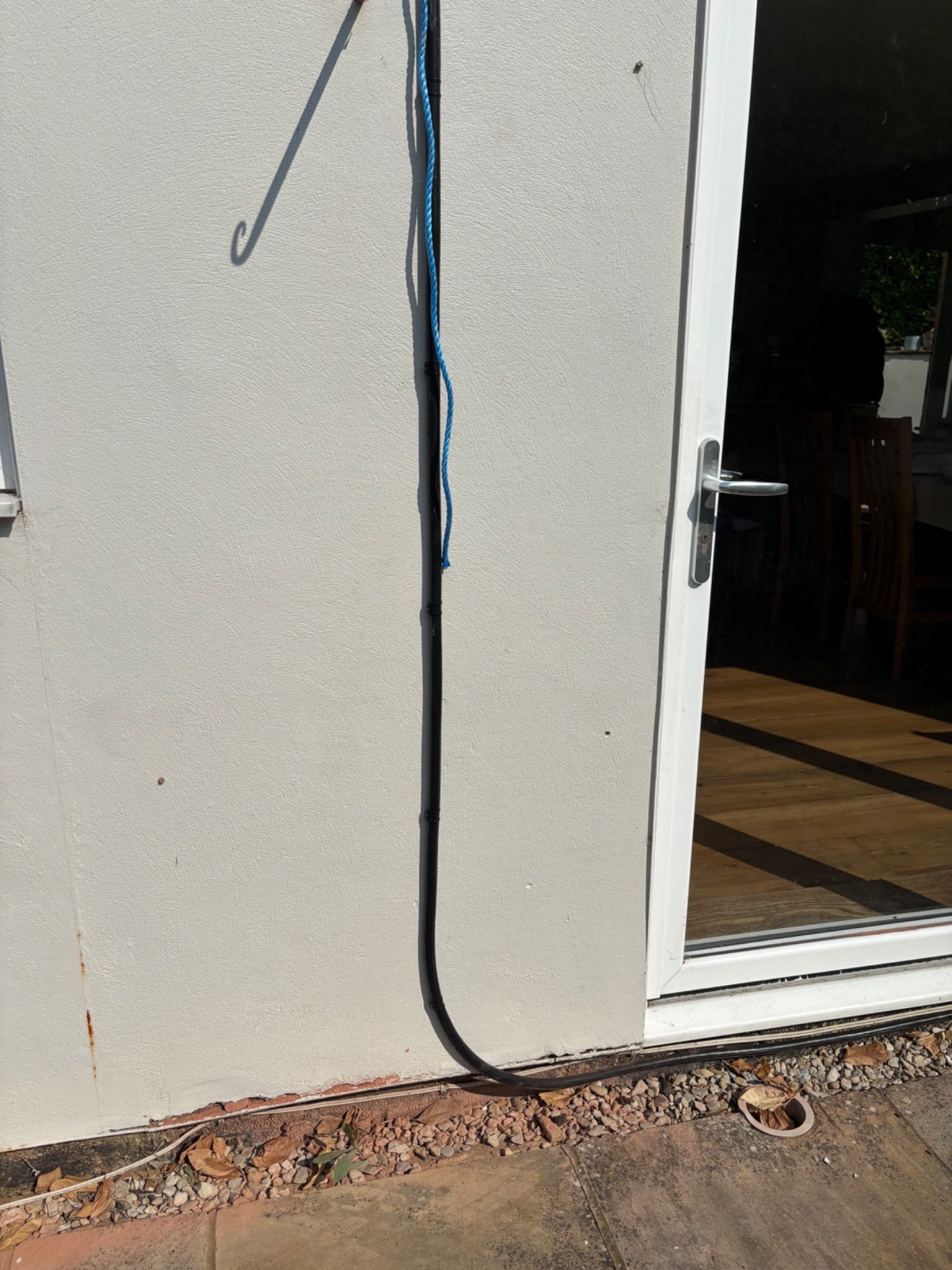
The customer mentioned they're planning to install solar panels in the future. Rather than make them dig up the garden again, we left a string rod in the cable route as we laid it. This means when they come to install solar panels, they can simply tie the new cable to the end of the rope and pull it through the same route. It's a small detail that saves significant disruption later on.
If you're thinking about adding solar panel installation to your home alongside an EV charger, tell us during the site survey. We can plan the cable routes to work together.
What was the final result?
The customer now has a fully functional 7.5 kW Hypervolt Home 3 Pro on a pedestal mount at the end of their driveway. The 7.5 metre cable reach means they can charge either car parked on the drive. The hardwired Ethernet connection keeps the charger online and controllable via the Hypervolt app.
The job involved two separate visits — one to pour the concrete base and one to install the charger and run the full cable route. It was complex, but it was designed well and executed exactly to plan.
This installation shows what's possible when you start with a proper site survey. We identified every challenge upfront, planned the solution carefully, and delivered a result the customer is genuinely happy with.
If your property has a long cable run, an outbuilding supply, or any other unusual layout, the same approach applies. We'll visit for free, assess the challenges, and design a solution that works. Call or WhatsApp us on 01494 977298 to book your free in-person site survey — no obligation, no forms.
Installation photos
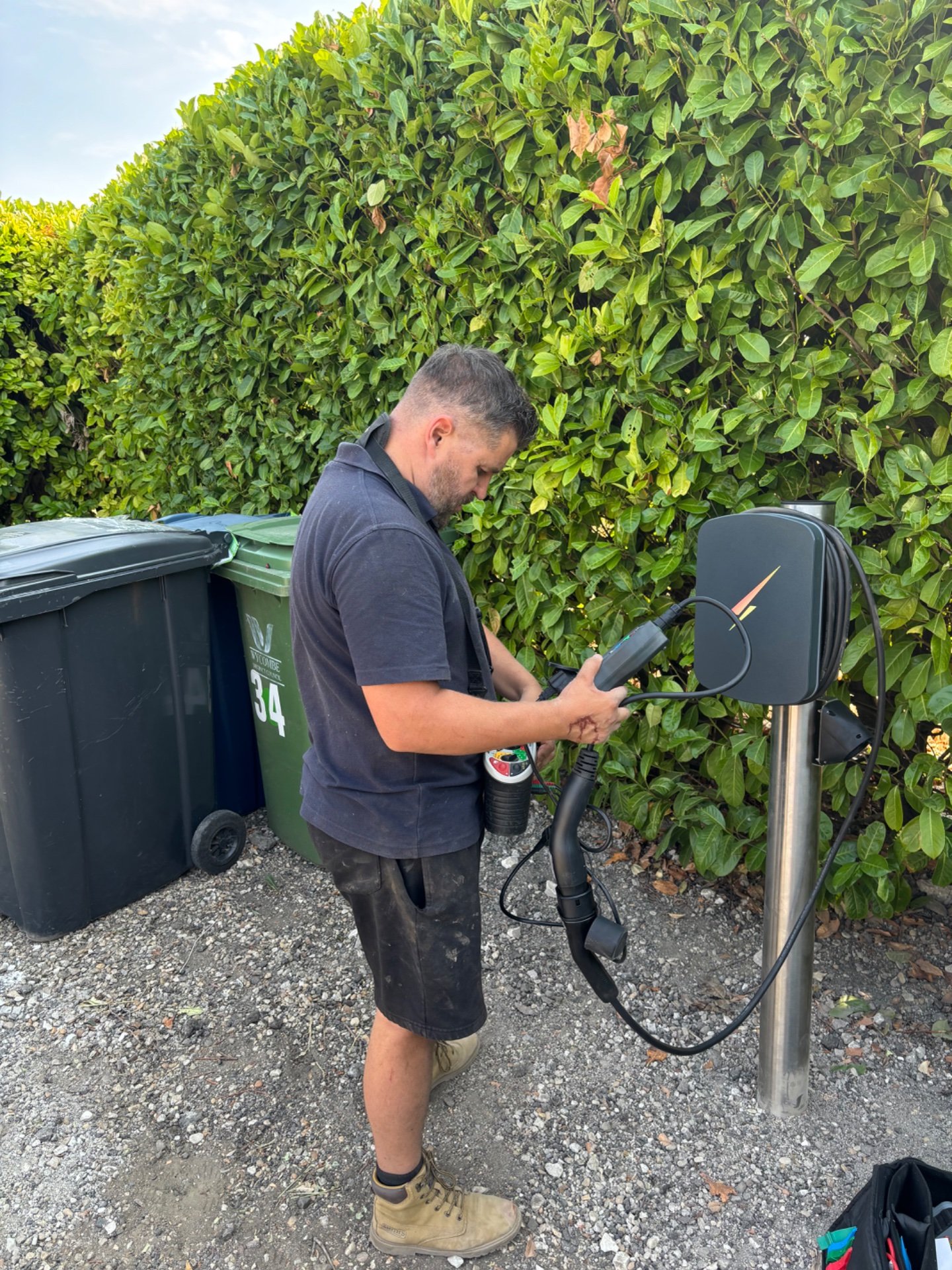
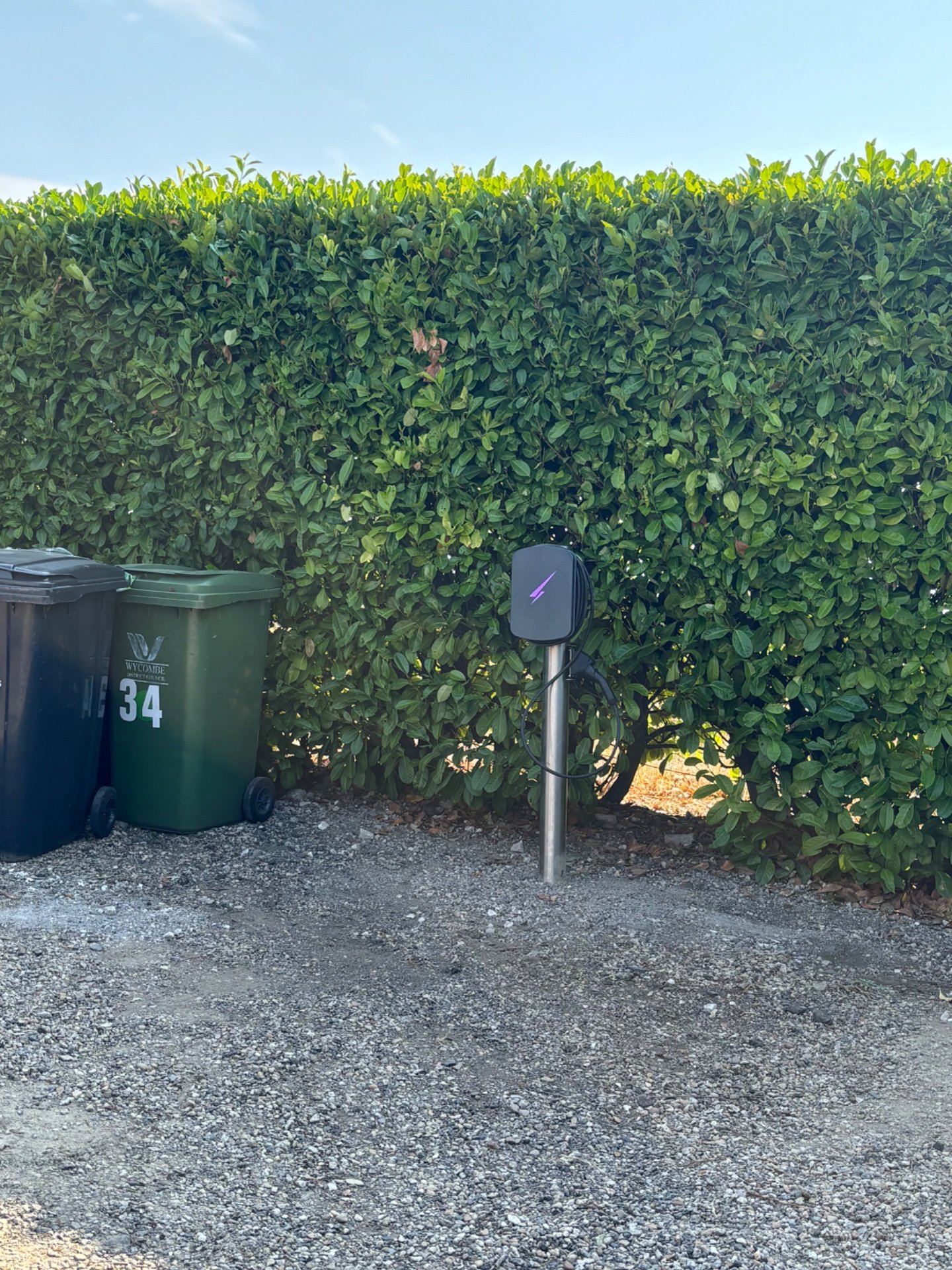
Hypervolt Home 3 Pro pedestal mount installed at a Princes Risborough driveway after a 36-metre cable run from the house.
Ready to have a charger installed?
Every job starts with a free, in-person site survey. No forms, no guesswork.
Book a Free SurveyCommon questions
Questions? Call us directly.
We are local, NAPIT-certified, and happy to talk through any project before you commit to anything.
Monday to Saturday 08:00 to 19:00. Local Chilterns team. We come to you.